User Research
Users: those who will ultimately use the product.
Stakeholders: define the initial motivations
Designers: research the users to know their needs
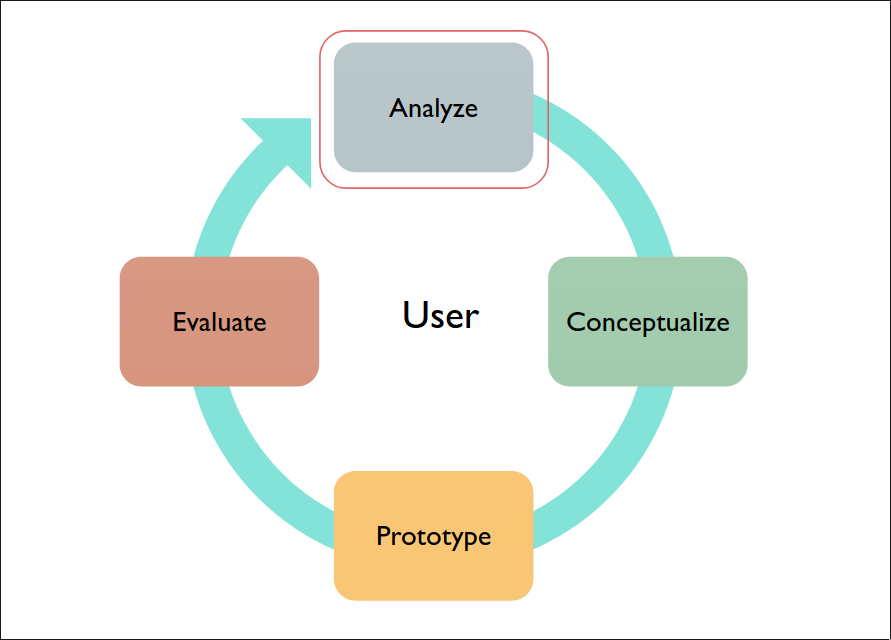
Initial Briefing
High level goals defined by the stakeholders, and it should not be too specific and should not assume much about the users or the interface.
User types
| Topics | Beginner | Advanced Beginner | Competent | Expert |
|---|---|---|---|---|
| Fears | Fear of failing and unknows | |||
| Focus | Execute needed work | Execute needed work | Execute more complex tasks | Develop mental model |
| Learning | Do tasks instead of concepts | Do tasks instead of concepts | Do tasks and learn concepts | Concepts and theories beyond regular use |
| Mental Model | Rudimentary (if any) | Developed as tasks are executed | Consistent model of the interface as a whole | Broad and consistent |
| Problem Solving | Simple problems | Complex problems |
Task analysis approaches
- Formal:
- Structures list of tasks, flow diagram.
- Adequate for existing systems, where there are processes already defined.
- Informal
- Follow a more exploratory approach to uncover the users needs.
- Adequate for creating new designs (or redesigning processes).
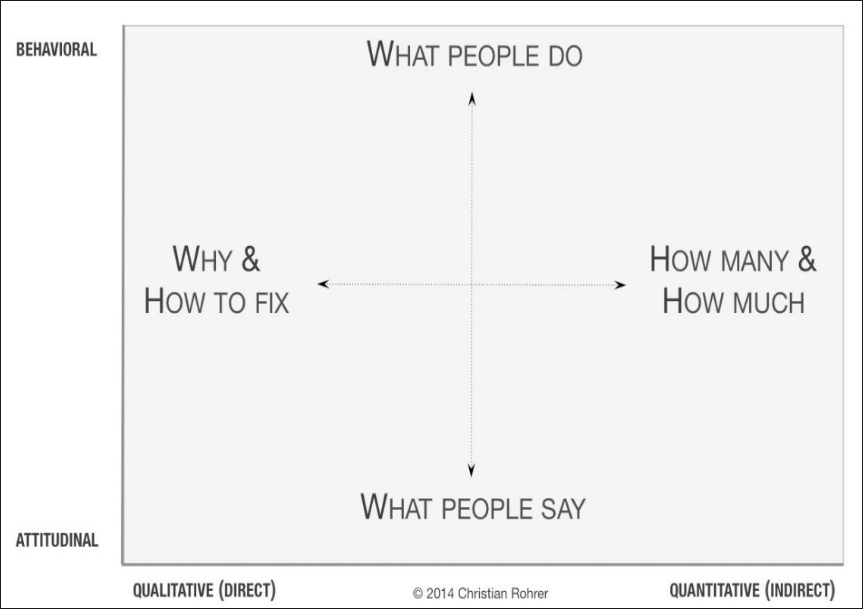
Attitudinal vs behavioral vs quantitative vs qualitative analysis
Ethnography
Aims to achieve an in-depth understanding of a culture.
Characteristics:
- Contextual:
- performed where people live, work, act
- Naturalistic:
- avoids (intentional) manipulation of existing conditions
- Longitudinal:
- sustained engagement with the setting under study
- Collaborative:
- research performed together with participants
- Interpretative:
- researcher is deeply involved in research and is part of it
- Being there:
- effort to pursue experiences as community members
PACT
- People
- relevant user characteristics and skills
- Activities
- how is the activity currently carried out?
- why? what can be improved?
- Context
- the environment of the activity
- what tools are used now, and how might new developments be used?
Personas
Rich description of one of a set of typical users. Not a real person, but a realistic one, that can be related to.